TABLE OF CONTENT
If you’ve been planning a home renovation or interior project recently, chances are your journey began online. Pinterest boards, Instagram reels, and Google image searches have become the new starting point for design inspiration. You save images of elegant living rooms, serene bedrooms, and kitchens that look effortlessly perfect.
And yet, when your own home finally comes together, something feels missing.
The furniture looks right. The colors are similar. The layout is carefully planned. Still, the space doesn’t feel like the image that first inspired you. This moment often leads to frustration and self-doubt. Many homeowners quietly wonder if they made the wrong choices or hired the wrong professionals.
After years of working with real homes, real budgets, and real families, We can say this clearly:
The problem is rarely the execution. The problem is the reference.
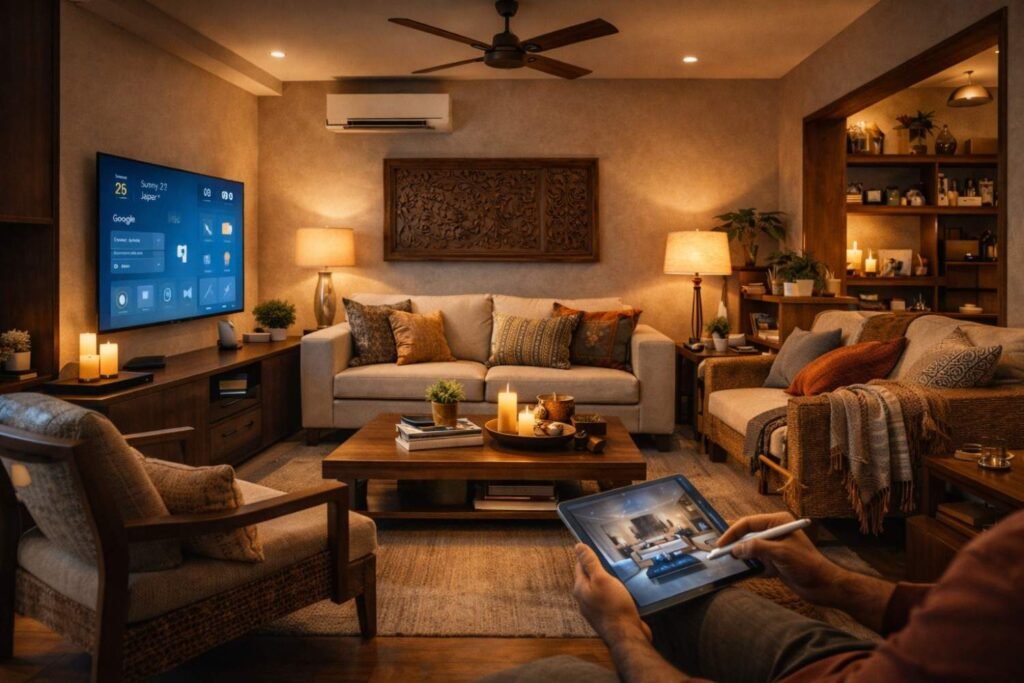
Many of the interiors people fall in love with today were never real spaces at all. They were generated by artificial intelligence.
How AI Quietly Changed Interior Design Inspiration
Artificial intelligence has transformed how images are created and shared. In interior design, AI tools can now generate hyper-realistic room visuals in seconds. These images are trained on millions of photographs and design styles, allowing them to produce spaces that look polished, luxurious, and emotionally appealing.
What makes these images powerful is also what makes them dangerous. They feel believable.
Unlike traditional interior photography, AI-generated images are not constrained by:
- Physical structures
- Building regulations
- Material availability
- Budgets
- Climate conditions
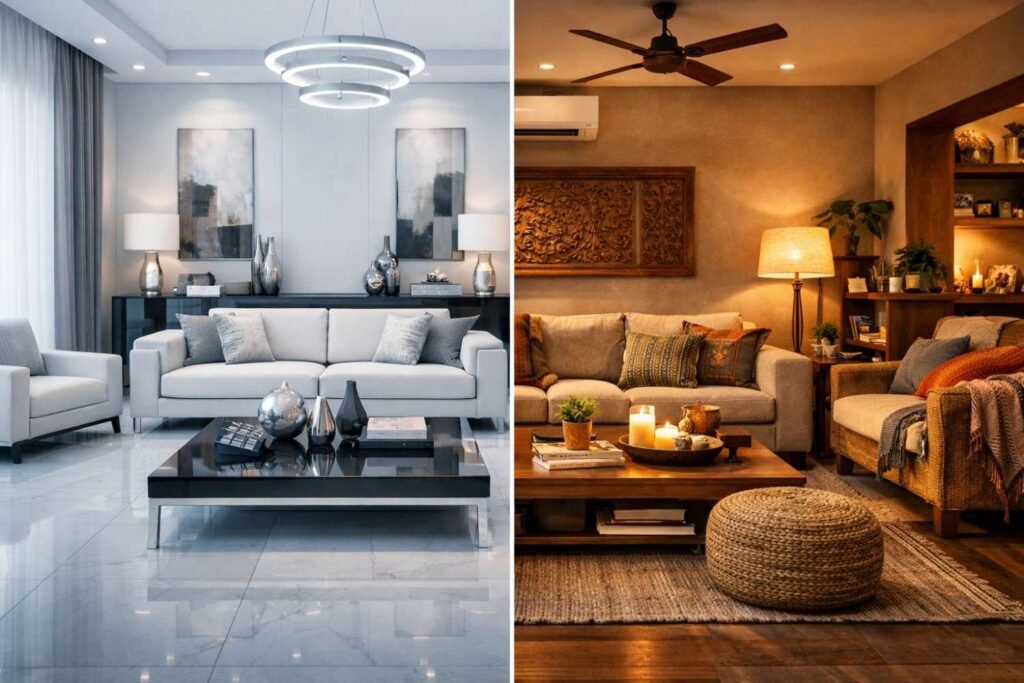
They exist in a fictional environment where everything aligns perfectly. This has created a new standard of “perfection” that real homes were never meant to meet.
At Endless Interiors & Construction, we’ve noticed a clear shift in client expectations over the last few years. People are no longer comparing their homes to magazine spreads or hotel interiors. They are comparing them to AI-generated ideals that ignore how homes actually function.
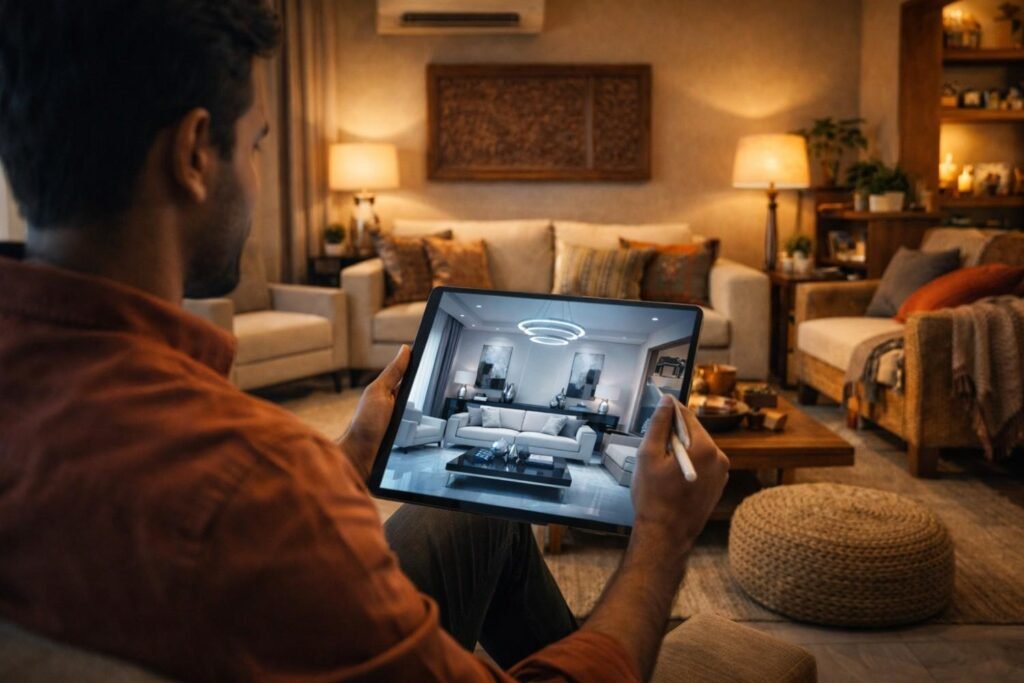
Why AI Interiors Look Better Than Real Homes
AI interiors appear flawless because they remove everything inconvenient about real life. Real homes are full of constraints. AI homes are not.
The Illusion of Perfect Balance
AI-generated rooms often feature perfect symmetry. Furniture aligns effortlessly. Artwork sits precisely at eye level. Nothing interrupts the visual flow. While this looks calming on screen, real homes rarely allow such balance.
In actual residential spaces, designers must work around:
- Off-center windows
- Structural columns
- Uneven wall lengths
- Fixed electrical points
Experienced designers use these irregularities to add character. AI simply deletes them. The result is a space that looks visually perfect but emotionally flat.
Lighting That Ignores Physics
One of the most common issues professionals notice immediately is lighting. AI interiors often show soft, even illumination across an entire room with no visible source. Light appears to come from everywhere and nowhere at the same time.
In real architecture, lighting depends on:
- Direction of windows
- Time of day
- Surrounding buildings
- Ceiling height
- Artificial lighting placement
Studies in architectural lighting and environmental psychology show that variation in light and shadow is essential for comfort. Constant, uniform lighting is not natural and often feels sterile over time.
AI ignores this entirely, creating images that look beautiful but are impossible to replicate in daily life.
For lighting standards in residential spaces, refer to bis.gov.in
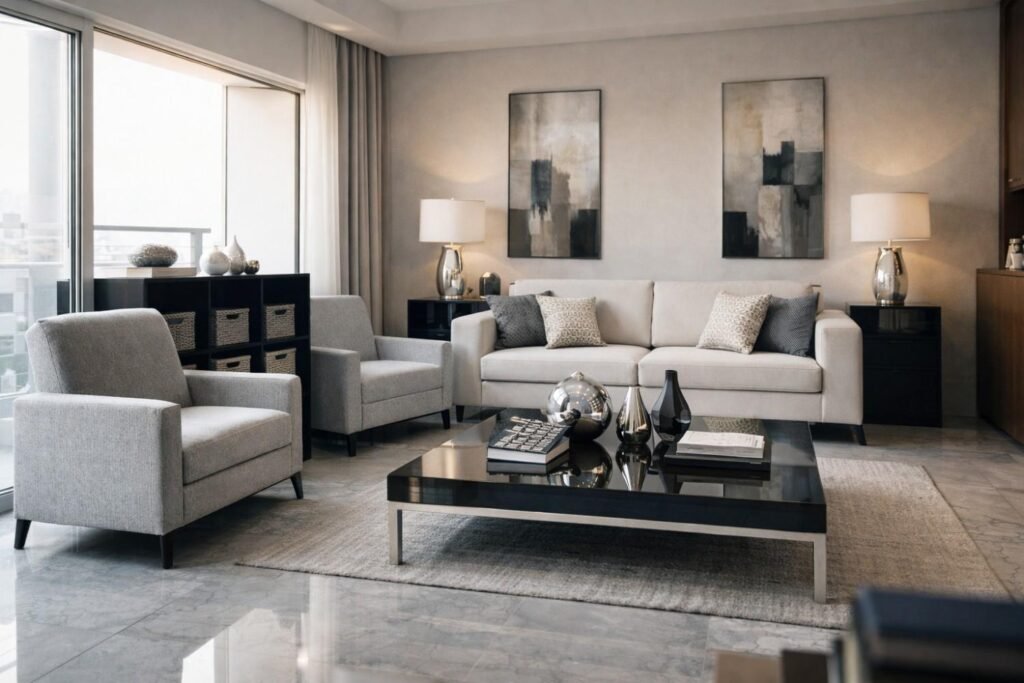
Furniture That Exists Only in Pixels
Another common trap lies in furniture design. AI frequently blends multiple furniture styles into a single “perfect” piece. A sofa may have ideal proportions, luxurious texture, and flawless detailing, but no manufacturer can produce the exact design.
Homeowners then face a difficult reality:
- The furniture doesn’t exist
- Custom production increases cost dramatically
- Available alternatives feel like compromises
In real professional practice, furniture is selected based on actual dimensions, ergonomics, and long-term comfort. AI has no understanding of how a chair feels after two hours of sitting or how a sofa performs after five years of use.
Scale That Looks Right but Feels Wrong
Interior design relies heavily on human scale. Decades of research guide how high a table should be, how deep a sofa should feel, and how much space people need to move comfortably.
AI often breaks these rules. Spaces may look visually balanced, but when translated into real measurements, they feel awkward or uncomfortable. Coffee tables are too small. Walkways feel cramped. Storage becomes impractical.
These issues only become apparent after construction is complete, when it’s too late to fix them easily.
How to Identify AI-Generated Interior Images
While AI images are becoming more realistic, they still leave clues.
Careful observation often reveals:
- Unreadable or distorted text on books and artwork
- Illogical reflections in mirrors and glass
- Missing switchboards, sockets, or vents
- Furniture joints that don’t structurally make sense
Another important indicator is context. Real interior projects usually appear with:
- Multiple angles
- Designer or studio credits
- Construction or styling details
AI images often exist as single, isolated visuals with no supporting documentation.
The Emotional Cost of Unrealistic Inspiration
The biggest impact of AI interiors is not technical. It is psychological.
Research in environmental psychology shows that satisfaction with a living space is strongly influenced by expectations. When expectations are based on unrealistic references, even well-designed homes can feel disappointing.
Homeowners begin to think:
- Their space lacks elegance
- Their budget was insufficient
- Their designer failed
In reality, they are comparing a functioning, lived-in home to a digitally perfected image that never had to deal with real life.
If this feeling sounds familiar, our guide on why your renovation went wrong in Jaipur
breaks down the real reasons behind post-renovation disappointment.
At Endless Interiors & Construction, much of the early design process now involves reframing inspiration. This step is critical. Without it, even excellent execution can feel like a letdown.
AI Interior Design Mistakes Jaipur Designers Correct Most Often
- How spaces feel at different times of day
- How materials age under daily wear
- How easily a home can be maintained
- How layouts adapt to changing lifestyles
Using AI Inspiration Without Falling Into the Trap
- A mood reference
- A color direction guide
- A starting point for conversation
- A final design plan
- A layout blueprint
- A construction reference
Asking the Right Questions Changes Everything
Instead of asking for exact replication, better results come from better questions.
For example:
- What makes this space feel calm?
- Which materials create this warmth?
- How can this atmosphere be adapted to my home’s layout?
These questions shift the focus from copying images to designing spaces that work in reality.
Why Homes Should Never Aim for Perfection
Perfect homes photograph well. They rarely live well.
Real homes must support:
- Daily routines
- Storage needs
- Family interactions
- Wear, mess, and change
AI-generated interiors are frozen moments. They don’t show clutter, movement, or aging. But these are not flaws. They are signs of life.
Design that allows for imperfection is more resilient, more comfortable, and ultimately more satisfying.
The Role of AI in the Future of Interior Design
AI will continue to improve. It will become more accurate, more detailed, and more accessible. It will remain a powerful visualization tool.
But interior design will always require:
- Human judgment
- On-site understanding
- Material knowledge
- Cultural and climatic awareness
Technology can generate ideas. Experience turns those ideas into homes that work.
Design a Home That Works in Real Life
Planning your home based on inspirational images, but want a design that actually works in your space?
At Endless Interiors & Construction, we help homeowners in Jaipur translate inspiration into practical, livable design solutions that match real layouts, real budgets, and real lifestyles.
Every project begins with understanding how you live, not how a digital image looks.
👉 Talk to our design team today and plan a home that feels right, not just looks perfect.
Frequently Asked Questions About AI Interior Design
AI images are useful for inspiration, mood, and color direction. However, they should not be used as execution plans because they ignore real layouts, lighting conditions, and practical usage requirements.
Most inspiration images are digitally generated or heavily styled. Real homes must adapt to structure, materials, lighting direction, and daily living needs, which changes the final outcome.
Use inspiration images to identify style, materials, and feeling — not exact layouts or furniture placement. Professional design adapts inspiration to your actual space.
Exact replication is rarely possible because AI images may include unrealistic proportions, lighting sources, or furniture that does not exist in real manufacturing.
Start with lifestyle needs, available space, and budget. Then use inspiration as direction while designing for comfort, usability, and long-term living.