
TABLE OF CONTENT
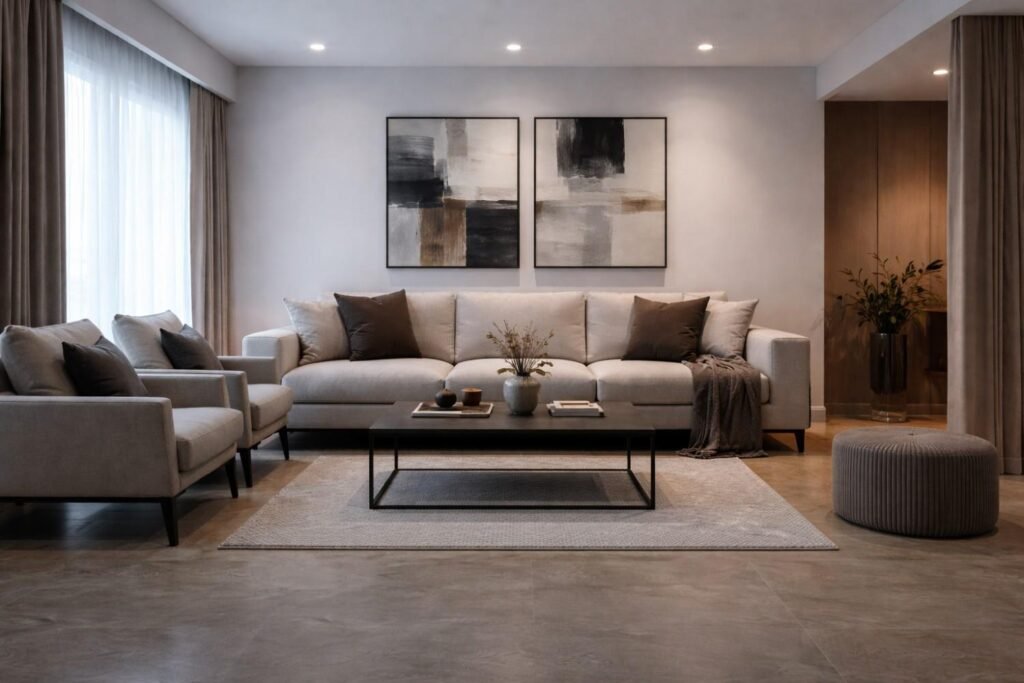
A renovation that feels off is the result of design decisions made without a unified visual plan — in which materials, lighting, proportions, and spatial flow are treated as independent choices rather than as a coordinated system.
You invested time.
You approved the drawings.
You stretched your renovation budget.
And yet… something doesn’t feel right.
Your home in Jaipur looks beautiful. Guests compliment it. Photos look perfect.
But when you sit quietly in your living room, there’s a subtle discomfort you can’t explain.
If you’ve ever wondered:
- Why doesn’t my renovated house feel cozy?
- Why does it look expensive but not comfortable?
- Why does something feel incomplete?
You’re not imagining it.
After years of handling real residential renovations across Jaipur, we’ve seen one consistent pattern:
When a home feels “off,” it’s rarely because of big visible mistakes.
It’s because foundational design principles were overlooked.
Let’s break down what professionals notice immediately.
1. Lighting Was Treated as a Final Step, Not a Foundation
Visual harmony in interior design is the principle of ensuring that all design elements — colors, materials, textures, furniture scale, and lighting — work together as a single coordinated system rather than as individual selections.
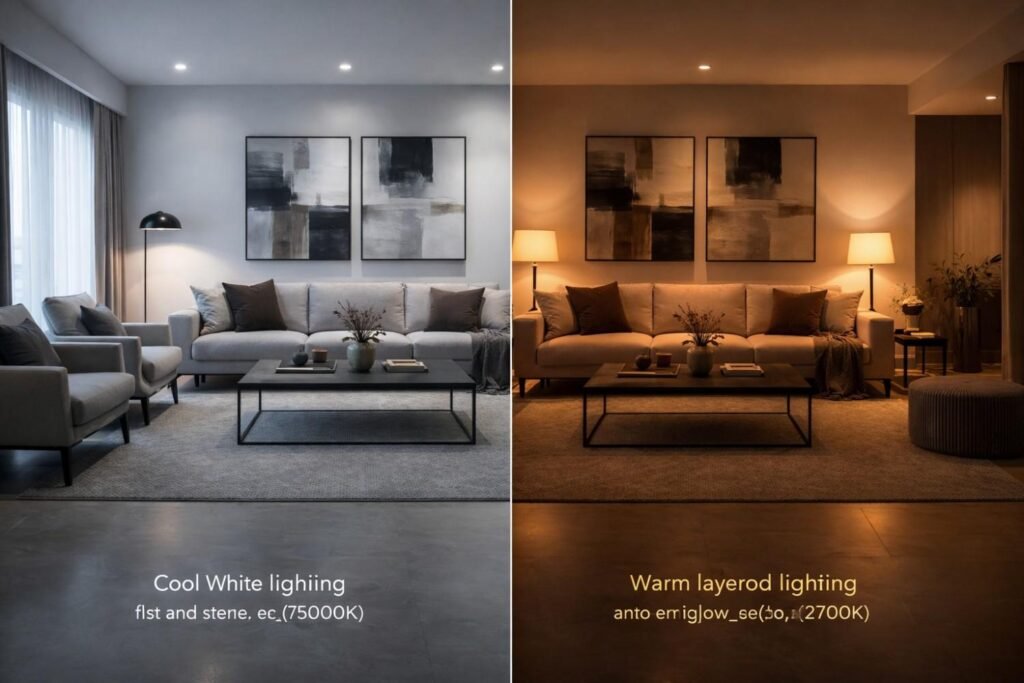
In many Jaipur homes, harsh white LED panels are still used assuming “brighter is better,” but brightness without warmth creates emotional discomfort.
Lighting is not decoration. It is architecture.
One of the biggest renovation mistakes is installing lights at the end without planning mood and function.
Many homes rely only on:
- Central ceiling lights
- Harsh white LED panels
- No layered lighting
The result? A space that feels flat and emotionally cold.
Here’s something most homeowners realize too late: lighting affects how every color, texture, and material appears.
Cool white lighting (5000K–6500K) may look “bright,” but it makes:
- Skin tones look dull
- Beige walls look grey
- Wooden finishes look lifeless
Warm lighting (2700K–3000K) creates comfort and softness.
At Endless Interiors & Construction, lighting planning begins before selecting finishes. We ensure layered lighting:
- Ambient for overall glow
- Task lighting for function
- Accent lighting for depth
When lighting is correct, even simple spaces feel luxurious.
2. Furniture Scale Was Chosen by Look, Not Measurement
This is one of the most common interior design mistakes.
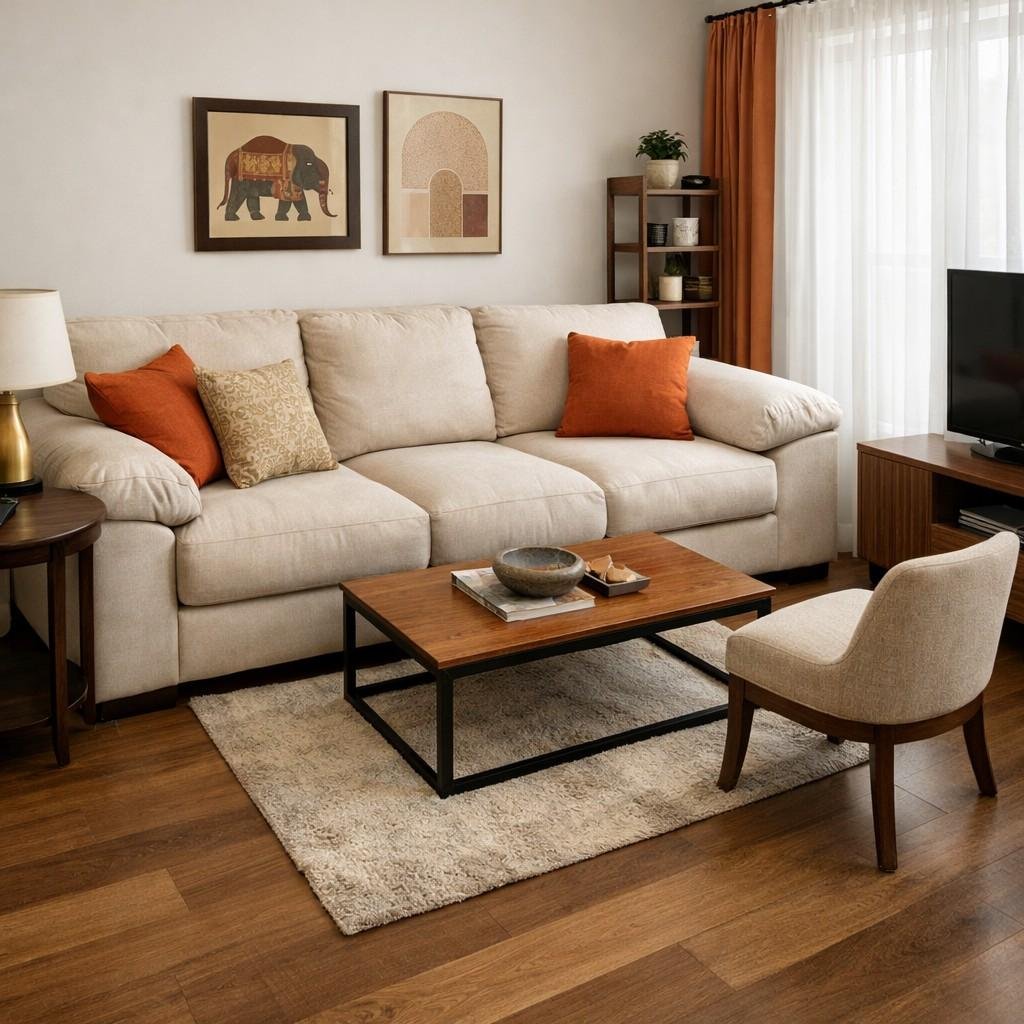
A sofa may look perfect in a showroom. But once placed inside your living room, it overwhelms the space or feels awkwardly large.
Or the opposite happens — the rug is too small, the coffee table looks disconnected, and chairs feel cramped.
Professionals look at:
- Room dimensions
- Circulation paths
- Visual weight
- Proportion ratios
For example:
- Walkways should ideally have 30–36 inches clearance.
- Rugs should anchor furniture, not float under a coffee table only.
- Coffee tables should be about two-thirds the length of the sofa.
When scale is wrong, the brain registers imbalance even if you don’t consciously understand why.
And that imbalance creates discomfort.
3. Everything Matches Too Perfectly
Many homeowners think matching sets equal good design.
Same wood tone.
Same finish.
Same fabric.
But when everything matches too perfectly, the space loses character.
It feels staged instead of lived-in.
Professional interiors rely on contrast and layering:
- Mix matte and gloss finishes
- Combine different textures
- Introduce subtle tone variations
Homes need visual rhythm, not uniformity.
When everything is identical, the space feels flat — even if expensive.
4. Storage Was an Afterthought
In modern Jaipur apartments and villas, insufficient concealed storage is one of the biggest post-renovation regrets.
This is where reality hits.
You move in.
Life begins.
Clutter appears.
Suddenly, your beautiful renovation feels chaotic.
A common thought clients express:
“Why does my house look messy so quickly?”
Because storage wasn’t deeply planned.
Open shelving looks stunning online, but daily life demands hidden storage. Without it, surfaces fill up fast.
At Endless Interiors & Construction, storage planning is never secondary. Before aesthetics, we evaluate:
- Lifestyle habits
- Number of daily-use items
- Family size
- Movement patterns
A home that manages clutter automatically feel calm.
5. Color Temperature Feels Emotionally Cold
You may not consciously analyze wall undertones. But your brain does.
Cool greys and stark whites dominated design for years. While they photograph beautifully, they can feel emotionally distant.
Ask yourself:
- Does your space feel slightly cold even in the evening?
- Do you avoid spending long relaxed hours there?
Warm undertones create psychological comfort.
Even adding:
- Wooden elements
- Warm fabrics
- Soft earthy accents
can rebalance a sterile space.
Color psychology is not theory. It affects how long people comfortably sit in a room.
6. There Is No Focal Point
Every room needs a visual anchor.
Without it, your eye keeps wandering, searching for structure.
A focal point could be:
- A feature wall
- A statement light fixture
- A fireplace
- A large artwork
- A window view
When furniture floats randomly without orientation, the room feels unsettled.
At Endless Interiors & Construction, layout planning always begins with identifying the focal point before arranging anything else.
Structure creates calm.
7. Curtains Were Installed Incorrectly
This seems minor, but it changes everything.
Common curtain mistakes:
- Hung too low
- Too narrow
- Fabric too thin
Curtains should often be hung closer to ceiling height to elongate walls. They should extend beyond the window frame so they don’t block light.
When done right, curtains add softness and height. When done wrong, they make a space feel compressed.
Small details shape perception.
For standard room proportion guidelines, refer to bis.gov.in
8. Too Much Decoration, Not Enough Breathing Space
After renovation, many people rush to fill walls and surfaces.
Frames.
Decor pieces.
Accent objects.
But visual clutter creates mental clutter.
Research shows that cluttered environments increase stress levels. The brain processes every object, even when you’re not consciously aware.
Negative space is not emptiness. It is intentional breathing room.
When a room feels “off,” sometimes the solution is removing things, not adding more.
9. Too Many Trends in One Room
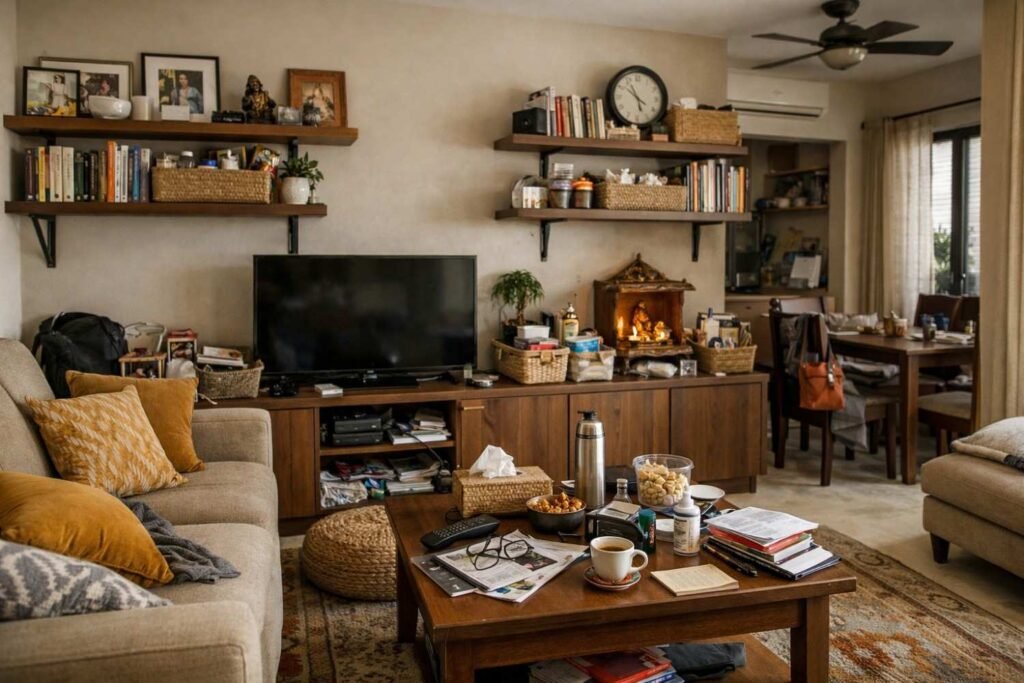
We often see Jaipur homes mixing Pinterest trends without a cohesive plan, which creates visual confusion instead of harmony.
Industrial lights.
Boho rugs.
Scandinavian chairs.
Modern art.
Individually beautiful. Together? Confusing.
When design lacks a consistent language, the space feels chaotic.
Professionals choose:
- A dominant style
- A secondary influence
- Controlled accents
Trends should enhance a timeless base, not replace it.
10. The Home Was Designed for Photos, Not Life
- Durability
- Comfort
- Maintenance practicality
- Flexibility
How to Avoid Home Renovation Mistakes Jaipur Designers See Most Often
Space planning is the process of analyzing and allocating interior space based on function, movement, and proportion — ensuring every element serves both a practical and aesthetic purpose before any material or furniture is selected.
After years of handling real renovations, professionals prioritize fundamentals before finishes.
At Endless Interiors & Construction, our renovation process focuses on:
- Lifestyle analysis before layout approval
- Lighting planning before paint selection
- Scale drawings before furniture ordering
- Material sampling in real site lighting
- Storage calculation before decorative shelving
Because a home must function long before it impresses.
Not sure what to look for when choosing a designer? Use our complete guide on how to hire the right designer
in Jaipur before you commit.
When best practices guide the renovation, the result feels right — not just looks right.
If Your Home Feels “Off,” Ask Yourself This
- Is the lighting layered and warm?
- Does the furniture scale truly suit the room?
- Is there a clear focal point?
- Is storage sufficient for daily life?
- Does the color palette support comfort?
Ready to Fix What Feels “Off” in Your Jaipur Home?
If your home feels slightly uncomfortable despite renovation, the issue is usually structural, not decorative.
📞 Book a consultation in Jaipur
📐 Get a professional layout evaluation
💡 Plan lighting the right way
🏡 Design a home that supports your real life
Contact Endless Interiors & Construction – trusted interior design experts in Jaipur – and create a home that doesn’t just look beautiful, but feels complete every day.
Frequently Asked Questions
A home often feels uncomfortable after renovation due to improper lighting planning, incorrect furniture scale, poor layout flow, or lack of sufficient storage. These are subtle design issues that affect how a space feels emotionally, even if it looks visually appealing.
One of the most common mistakes is treating lighting as a final step instead of planning it from the beginning. Harsh white lighting, lack of layered lights, and poor placement can make a home feel cold and flat.
Furniture scale is extremely important. Oversized sofas, small rugs, or incorrectly proportioned tables disrupt balance and circulation space. Proper measurement and layout planning ensure comfort and visual harmony.
Many modern interiors are designed to look good in photos rather than support daily living. Without warmth, texture variation, layered lighting, and practical storage, a home can feel staged instead of welcoming.
You can improve comfort by using warm lighting (2700K–3000K), introducing wooden textures, adding layered lighting, ensuring proper furniture proportions, and reducing visual clutter. A professional layout evaluation can help identify structural imbalances.
While small updates can be done independently, major renovations benefit from professional planning. Designers evaluate lighting, scale, circulation, material performance, and lifestyle needs to prevent costly mistakes and long-term discomfort.
Conclusion
A home that feels right doesn’t happen by accident.
It happens when lighting, scale, proportion, storage, and emotion align.
After years of working in interior design, we’ve learned this:
People rarely regret spending more on quality.
They regret skipping foundational planning.
If you’re planning a renovation or feel something isn’t working in your current space, don’t ignore that feeling.
At Endless Interiors & Construction, we ensure every renovation follows proven best practices, not just trends, so your home feels complete, comfortable, and timeless. Fix your renovation with us — start with a free consultation.