
Quick Answer: Jaipur sits in Seismic Zone II under IS 1893:2016 — a classification most interior firms ignore during heritage renovations. In a haveli or pre-independence bungalow, this is a serious mistake. Every wall you open, every heavy material you add, every floor system you alter is a seismic decision — whether your designer knows it or not. A heritage structural assessment (₹45,000–₹1.5 lakhs) before any interior work begins is not optional. It is the document that every subsequent design decision must be made. The Chandpole haveli in this guide lost ₹28 lakhs in interior damage because this step was skipped. This guide tells you exactly what Zone II means for your property, what seismic retrofitting actually costs, and which interior materials are safe — and which are not.
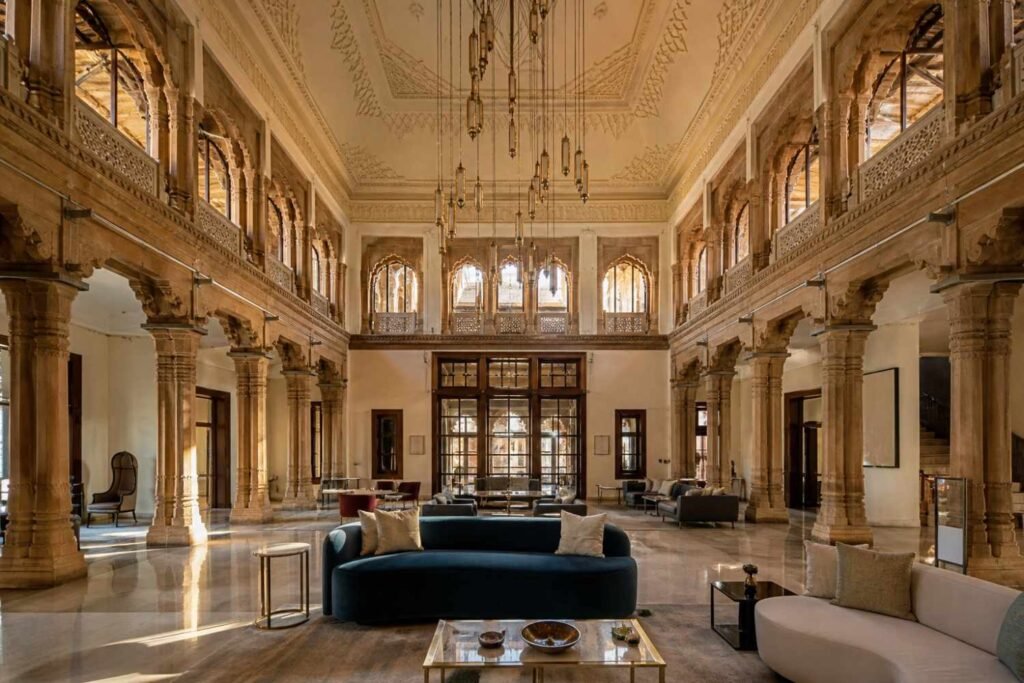
TABLE OF CONTENT
Seismic Retrofitting Jaipur Heritage Homes: Why Zone II Cannot Be Ignored
The haveli had stood in the old city — the pink-walled lanes near Chandpole — for somewhere between 180 and 220 years. No one knew exactly when it was built. The carved sandstone jharokha windows on the facade had weathered Mughal campaigns, British administration, Partition, and six decades of independent India’s enthusiastic building codes.
It had, in other words, survived everything Jaipur could throw at it.
Then the renovation began.
The owner — a second-generation NRI who had inherited the property and wanted to restore it as a luxury family residence — hired a reputable interior firm from Delhi. The firm was talented. The interiors they specified were genuinely beautiful. What they did not do was engage a structural engineer familiar with Rajasthan’s seismic classification before they began removing load-bearing elements to create an open-plan living room.
Three months after completion, a moderate seismic event — a 4.2 magnitude tremor centred in Nagaur — sent hairline cracks through three walls and dislodged a carved stone archway that had stood without mortar for over a century. The interior damage alone — shattered Italian marble, collapsed false ceiling, cracked veneer panels — came to ₹28 lakhs.
The structural assessment that followed revealed something more alarming: the renovation had, in attempting to modernise the haveli, inadvertently removed two of its primary lateral load paths — the structural routes through which seismic energy was distributed and dissipated through the old building. In doing so, it had made a 200-year-old structure significantly more seismically vulnerable than it had been before the first rupee was spent.
This is not an isolated case of poor planning. It is a systemic failure that plays out repeatedly across Jaipur’s extraordinary stock of heritage residential properties — havelis in the old city, colonial-era bungalows in Civil Lines, pre-independence residential buildings in Bapu Nagar and Adarsh Nagar.
Jaipur sits in Seismic Zone II under India’s IS 1893:2016 classification — considered a ‘low to moderate’ seismic hazard zone. This designation leads many architects and interior designers to treat seismic considerations as optional, or as a purely structural concern with no bearing on interior design decisions. Both assumptions are dangerously wrong.
In heritage structures, interior design decisions — where walls are removed, where new load-bearing elements are introduced, where heavy stone cladding is applied to existing walls, where floor systems are altered — are structural decisions. And in Jaipur’s seismic context, they carry consequences that neither the designer nor the homeowner has typically been briefed on.
In a heritage structure, every interior design decision is also a structural decision.
Understanding Seismic Zone II: What It Actually Means for a Jaipur Heritage Property
Think of your heritage haveli or bungalow as a living thing that has spent 100–200 years learning how to flex. Old structures in Jaipur were built with lime mortar — a material that, unlike modern cement, actually allows slight movement between structural elements. This designed flexibility is one of the primary reasons these buildings have survived multiple seismic events over their lifetimes. They do not resist earthquake energy the way a rigid modern concrete frame does. They absorb and distribute it.
When a renovation introduces rigid modern materials — concrete topping slabs, cement plaster, heavy stone cladding bonded with modern adhesives — into a lime-mortar heritage structure, it disrupts this centuries-old flexibility. The building no longer flexes the way it was designed to. It becomes partly rigid and partly flexible — and the interfaces between these two systems become the points of seismic failure.
Zone II Seismic Parameters for Jaipur (IS 1893:2016): Zone Factor (Z): 0.10 | Response Spectrum: Medium soil assumed for most Jaipur residential | Expected Peak Ground Acceleration: 0.05–0.10g | Design Basis Earthquake return period: 475 years | Maximum Considered Earthquake return period: 2,475 years
For the full IS 1893:2016 seismic zoning map and Zone II design parameters, refer to the National Disaster Management Authority of India.
A Zone II designation does not mean ‘safe to ignore.’ It means that the design basis earthquake — the event your structure should survive without collapse — has a 10% probability of being exceeded in 50 years. For a heritage property that is expected to stand for another 100–200 years, the probability of experiencing a significant seismic event during its remaining life is not negligible. It is a design input.
The IS 1893:2016 code also makes a critical distinction that most Jaipur renovation projects miss: heritage structures are explicitly categorised as requiring special consideration, as their lateral load resisting systems — the mechanisms through which seismic force is managed — are fundamentally different from modern framed structures. Applying modern renovation techniques to a heritage structure without seismic assessment is not just architecturally insensitive. It is non-compliant.
The full text of IS 1893:2016 is available through the Bureau of Indian Standards portal — every heritage renovation project in India should have this document in its brief.
What Seismic Retrofitting Actually Looks Like Inside a Jaipur Haveli
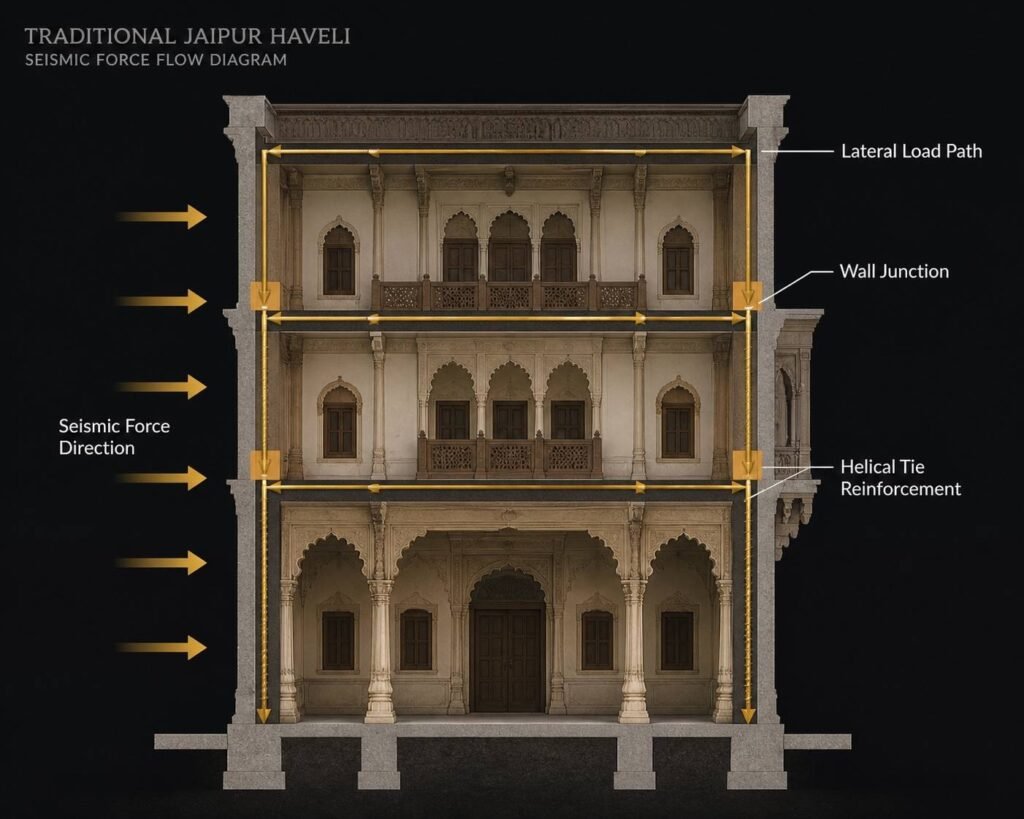
Seismic retrofitting in the context of a heritage interior renovation is not about building a new structure inside your haveli. It is about understanding the existing structural system, preserving its load paths, and introducing targeted reinforcements that strengthen without destroying.
At Endless Interiors & Construction, our seismic retrofitting protocol for heritage projects involves four categories of intervention — each of which directly intersects with interior design decisions.
Category 1 — Structural Assessment Before Any Interior Work Begins
This is the non-negotiable first step that the Chandpole haveli renovation skipped. Before a single wall is touched, plastered, or cladded, a qualified structural engineer must conduct a full lateral load path analysis of the existing building. This identifies which walls are load-bearing, which openings are safe to enlarge, and which elements are contributing to the building’s seismic performance — even if they do not look structural.
- Cost for a heritage structural assessment in Jaipur (2026): ₹45,000–₹1.5 lakhs depending on property size and complexity.
- Timeline: 2–4 weeks including documentation. This happens before design commences, not during construction.
- Output: A Structural Intervention Drawing (SID) that maps all permissible and restricted interventions. Every interior designer on the project works from this document.
Category 2 — Preserving and Reinforcing Lateral Load Paths
The most common seismic damage in Jaipur heritage interiors occurs at wall junctions — where two perpendicular walls meet. In old lime-mortar construction, these junctions are often weakly bonded. Modern retrofitting introduces stainless steel or mild steel ‘helical bar’ ties, a retrofitting technique endorsed by the Indian National Trust for Art and Cultural Heritage (INTACH) for sensitive heritage masonry conservation.at junction points, thin threaded rods grouted into the masonry at regular intervals that stitch the perpendicular walls together without disrupting the heritage surface finish.
- Helical bar tying: ₹180–₹320 per linear metre of treated junction. For a typical haveli with 40–60 metres of critical wall junctions: ₹7,200–₹19,200 in material and labour.
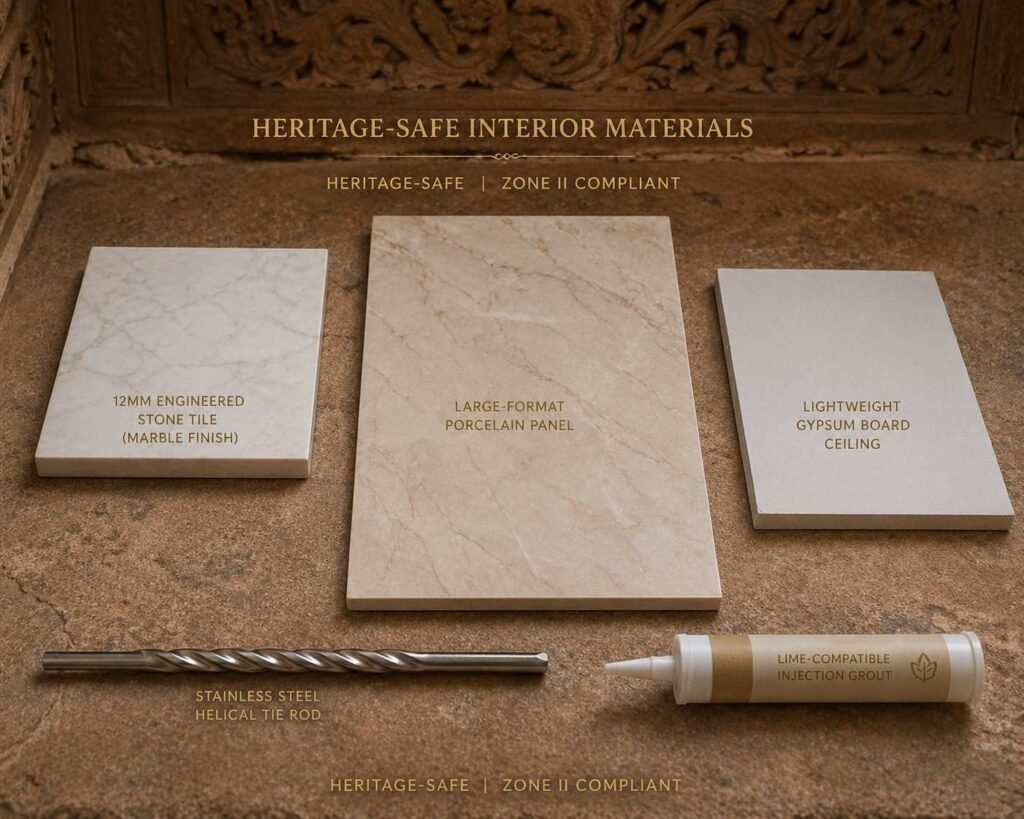
- Lime-compatible injection grout: Used to consolidate voids and weak mortar joints in existing masonry. Must be lime-based — not cement — to maintain the structural flexibility of the heritage fabric.
- Interior finish impact: Helical ties require 12–16mm diameter holes at 300–500mm intervals. In plastered surfaces, these are filled and refinished. In exposed stone surfaces, they require plugs in matching stone — a skilled mason task that should be scoped separately.
Category 3 — Managing Heavy Material Addition to Heritage Structures
One of the most common — and most dangerous — mistakes in Jaipur heritage renovations is the application of heavy stone cladding to existing walls without seismic assessment. A full-height wall of 25mm natural stone cladding adds approximately 60–80 kg per square metre to the wall’s self-weight. In a seismic event, this additional mass creates proportionally greater lateral forces — forces the original structure was not designed to resist.
The Rule of Added Mass: Every 100kg of material added to a heritage structure increases the seismic lateral force on that element by approximately the same factor as the weight increase. A 30% increase in wall mass = a 30% increase in earthquake demand on that wall’s connections and foundations.
- For stone cladding on heritage walls: specify lightweight stone (20–25mm thickness maximum), secure with stainless steel anchor ties into the masonry (not adhesive-only), and limit continuous cladded wall runs to 4 metres before a structural break joint.
- For heavy marble or stone flooring on upper floors: always commission a structural floor loading assessment. A 30mm marble floor on a lime-concrete heritage floor system may exceed safe load limits. Specify 12–15mm engineered stone or large-format porcelain as the heritage-safe alternative. For how material selection works across Jaipur’s climate conditions, read our plywood vs MDF Jaipur guide.
- For false ceilings in heritage rooms: use lightweight aluminium grid systems with gypsum board — never heavy plaster ceilings. In a seismic event, a heavy plaster ceiling is the first element to detach and the most dangerous.
Category 4 — The Interior Finish Specification for Seismic Resilience
This is where the intersection of seismic engineering and luxury interior design becomes most visible — and most relevant to the homeowner who wants both beauty and safety.
Interior Element | Seismic Risk | Heritage-Safe Specification |
|---|---|---|
Heavy stone wall cladding | Detachment + wall overload | Max 25mm thickness, SS anchor ties, 4m max continuous run |
Marble upper-floor flooring | Exceeds heritage floor load capacity | 12–15mm engineered stone or large-format porcelain |
Heavy plaster false ceilings | First element to fall in seismic event | Lightweight aluminium + gypsum board only |
Full-height glass partitions | Shatters and delaminates under lateral movement | Frameless toughened + laminated safety glass with flex joints |
Freestanding heavy furniture (stone, solid wood) | Topples and damages finishes and occupants | Secure all items over 50kg to wall or floor anchors |
Ornamental carved stone elements | Detachment risk from high-stress masonry zones | Commission structural engineer sign-off before retention |
Built-in stone or heavy joinery on upper walls | Added mass at height amplifies seismic demand | Weight limit assessment required; prefer lightweight alternatives |
The Endless Approach: Heritage Reverence with Engineering Precision
We were engaged on a similar haveli project in Johari Bazaar — a 170-year-old double-storey structure that the owner wanted to convert into a contemporary luxury residence while preserving every original architectural element. Carved brackets, jharokha windows, ornamental lime plasterwork, the central courtyard’s stone columns. Nothing was to be touched that did not need to be touched.
Before our interior team produced a single concept board, we commissioned a heritage structural assessment. This is the same first step we follow on every project — see how our design process works from brief to handover. The report identified four critical wall junctions requiring helical tie reinforcement, two doorway openings that could not be enlarged without introducing a lintel beam, one upper-floor zone with a lime-concrete floor slab showing signs of carbonation-induced weakness, and a carved stone balcony that required reanchoring before any live load could be permitted on it.
This assessment cost ₹85,000 and took three weeks. It informed every subsequent interior decision — which walls received stone cladding and which received lime plaster finishes instead, where lightweight gypsum ceilings replaced the temptation for heavier decorative plasterwork, how furniture was anchored in the formal reception rooms.
The project was completed in eleven months. Every original architectural element was preserved. The structural retrofit was invisible — embedded in the walls, expressed only in the knowledge that the building was now more seismically capable than it had been at any point in its 170-year history.
The best seismic retrofit is the one the building shows no sign of having received.
This is the standard every Jaipur heritage interior renovation deserves. Not the dramatic intervention of exposed steel frames and visible reinforcement — which destroys the soul of a heritage property — but the quiet, precise, invisible engineering that lets the beauty speak without compromise.
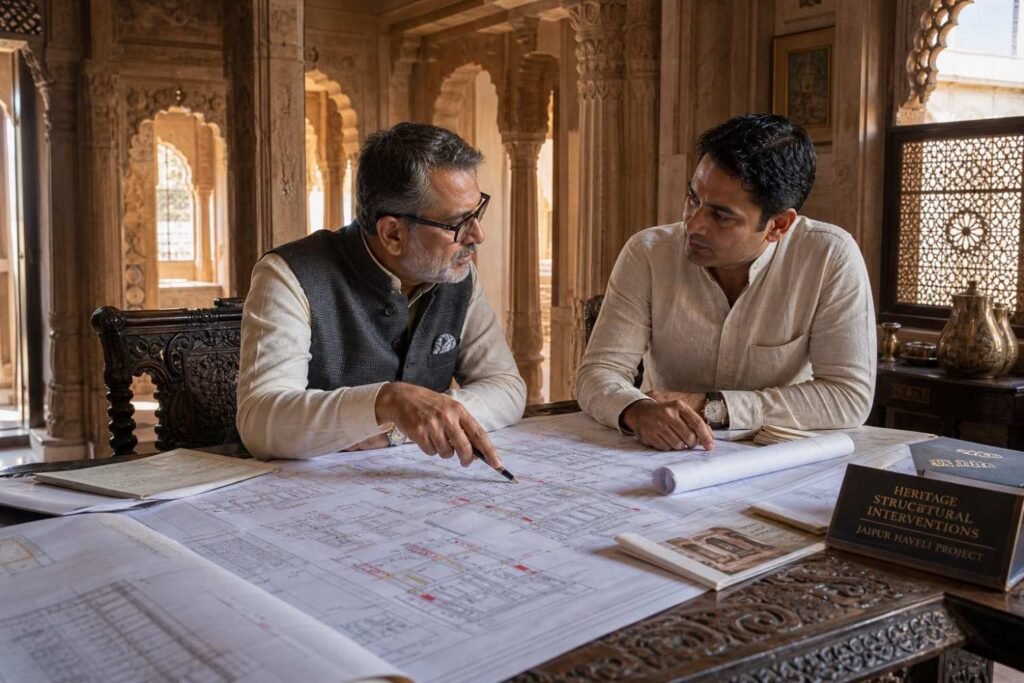
Heritage Renovation Structural Assessment — By Endless Interiors & Construction
Before you finalise any interior design brief for a heritage haveli, bungalow, or pre-independence residential property in Jaipur, commission the structural assessment that protects both the building and your investment. We coordinate the full process — structural engineer engagement, lateral load path analysis, seismic-safe material specification, and interior design that works within the structural reality.
Protecting a 200-year-old building is not a design constraint. It is the design brief. See our completed projects — each one reflects this standard.
Key Takeaways — Seismic Retrofitting for Jaipur Heritage Interiors
- Jaipur is classified as Seismic Zone II under IS 1893:2016 — a “low to moderate” hazard zone that still carries a 10% probability of a significant seismic event being exceeded in 50 years. For a heritage property expected to last another 100–200 years, this is a design input, not a footnote.
- In a heritage haveli or bungalow, every interior design decision is also a structural decision. Opening walls, adding heavy stone cladding, changing floor systems — all affect the building’s lateral load paths and seismic behaviour.
- Old lime-mortar heritage structures are designed to flex under seismic load — not resist it rigidly. Introducing rigid modern materials (cement plaster, heavy bonded stone cladding) into a lime-mortar structure disrupts this flexibility and creates points of seismic failure at material interfaces.
- A heritage structural assessment costs ₹45,000–₹1.5 lakhs. Physical retrofitting interventions (helical bar tying, injection grouting, anchor systems) add ₹3–₹12 lakhs to a renovation budget — typically 5–15% of total project cost.
- Every 100kg of material added to a heritage wall increases the seismic lateral force on that element by the same proportion. Heavy stone cladding without seismic assessment is one of the most common and most dangerous mistakes in Jaipur heritage renovation.
- False ceilings in heritage rooms must use lightweight aluminium grid and gypsum board — never heavy plaster. In a seismic event, a heavy plaster ceiling is the first element to detach.
- The best seismic retrofit is the one that is completely invisible — embedded in the walls, expressed only in the building’s improved structural resilience and the homeowner’s confidence.
- Commission the structural assessment before the interior brief is written — not during construction. The Chandpole case study in this guide shows what it costs to reverse that sequence.
Frequently Asked Questions: Seismic Retrofitting for Jaipur Heritage Homes
Zone II is classified as 'low to moderate' seismic hazard — but this does not mean risk-free, particularly for heritage structures. The design basis earthquake for Zone II has a 10% probability of being exceeded in 50 years. For a heritage haveli expected to stand for another 100–200 years, this translates to a meaningful probability of experiencing a significant seismic event over its remaining life. More critically, IS 1893:2016 explicitly requires special consideration for heritage structures, as their lateral load resisting systems are fundamentally different from modern framed buildings. Zone II does not mean ignore — it means design carefully.
Costs vary significantly based on the structure's condition, size, and the extent of planned interior work. A baseline structural assessment for a medium-sized haveli (3,000–5,000 sq. ft.) costs ₹45,000–₹1.5 lakhs. Physical retrofitting interventions — helical bar tying at wall junctions, lime-compatible injection grouting, anchor systems for stone cladding — typically add ₹3–₹12 lakhs to a full interior renovation project. This represents 5–15% of a typical heritage renovation budget and is the most cost-effective insurance against both seismic damage and the liability of an unassessed structural intervention.
Yes, but only after a structural loading assessment confirms the existing floor and wall systems can carry the added weight. A 25–30mm natural marble floor on an upper-level heritage lime-concrete floor slab may exceed safe load limits. The heritage-safe alternative is 12–15mm engineered stone or large-format porcelain tile, which delivers comparable luxury aesthetics at approximately one-third the weight. For wall cladding, stone panels must be anchored with stainless steel mechanical ties — not adhesive alone — and continuous cladded wall runs should not exceed 4 metres without a structural break.
When specified and executed correctly, seismic retrofitting of a heritage structure should be entirely invisible. Helical bar tying involves 12–16mm diameter holes at 300–500mm intervals — filled and refinished to match the existing surface. Lime-compatible injection grouting is applied through small-diameter ports that are subsequently plugged. The entire intervention philosophy for Jaipur heritage properties should be minimum intervention, maximum reversibility — the same principle that governs international heritage conservation practice under the Venice Charter. A well-executed retrofit leaves no visible trace while significantly improving the building's structural performance.
In a heritage structure: yes, always. This is the most critical misunderstanding in Jaipur's heritage renovation market. Interior decisions that appear non-structural — applying stone cladding to walls, removing partition walls to create open-plan spaces, installing heavy false ceilings, introducing new floor finishes on upper levels — all affect the structural behaviour of a heritage building, particularly under seismic loading. The Chandpole haveli case at the opening of this article illustrates precisely what happens when interior renovation proceeds without structural assessment. A qualified structural engineer familiar with heritage buildings and IS 1893:2016 Zone II requirements should be the first professional engaged on any Jaipur heritage renovation, before interior designers, before contractors, and before any design decisions are made.
Final Thought
The haveli near Chandpole that opened this guide is not an anomaly. It is what happens when seismic retrofitting is treated as someone else’s problem — the structural engineer’s concern, not the interior designer’s, not the homeowner’s.
In Jaipur’s heritage residential stock, that separation does not exist. The interior designer who specifies where a wall is opened, where stone cladding is applied, where a false ceiling is installed — that designer is making structural decisions. In a Zone II seismic context, with a heritage building that has spent a century learning how to flex, those decisions carry consequences that no amount of beautiful Italian marble will fix after the event.
Seismic retrofitting in Jaipur heritage interiors is not a constraint. It is a form of respect — for the building, for the craftsmanship of the people who built it, and for the investment of the person who is now its custodian.
At Endless Interiors & Construction, the structural assessment is not an optional add-on. It is the document that every interior decision is made against. The beauty of the finished renovation is not despite the engineering — it is because of it.
If you are planning a renovation of a heritage haveli, bungalow, or pre-independence residential property in Jaipur, the conversation starts with the structure — not the mood board.
Book your free Heritage Renovation Consultation →
Before you finalise a single interior decision, take a look at our completed projects — each one is a case study in design that works with the building, not against it.